There’s an interesting stage in the life of a business where growth starts to create a different set of problems.
We see it often with established companies. They have a good reputation, loyal customers, a capable team, real revenue and years of experience. Nobody needs to teach them how to run their business.
But ask how they plan to add the next $1 million in revenue, and the answer often gets less clear.
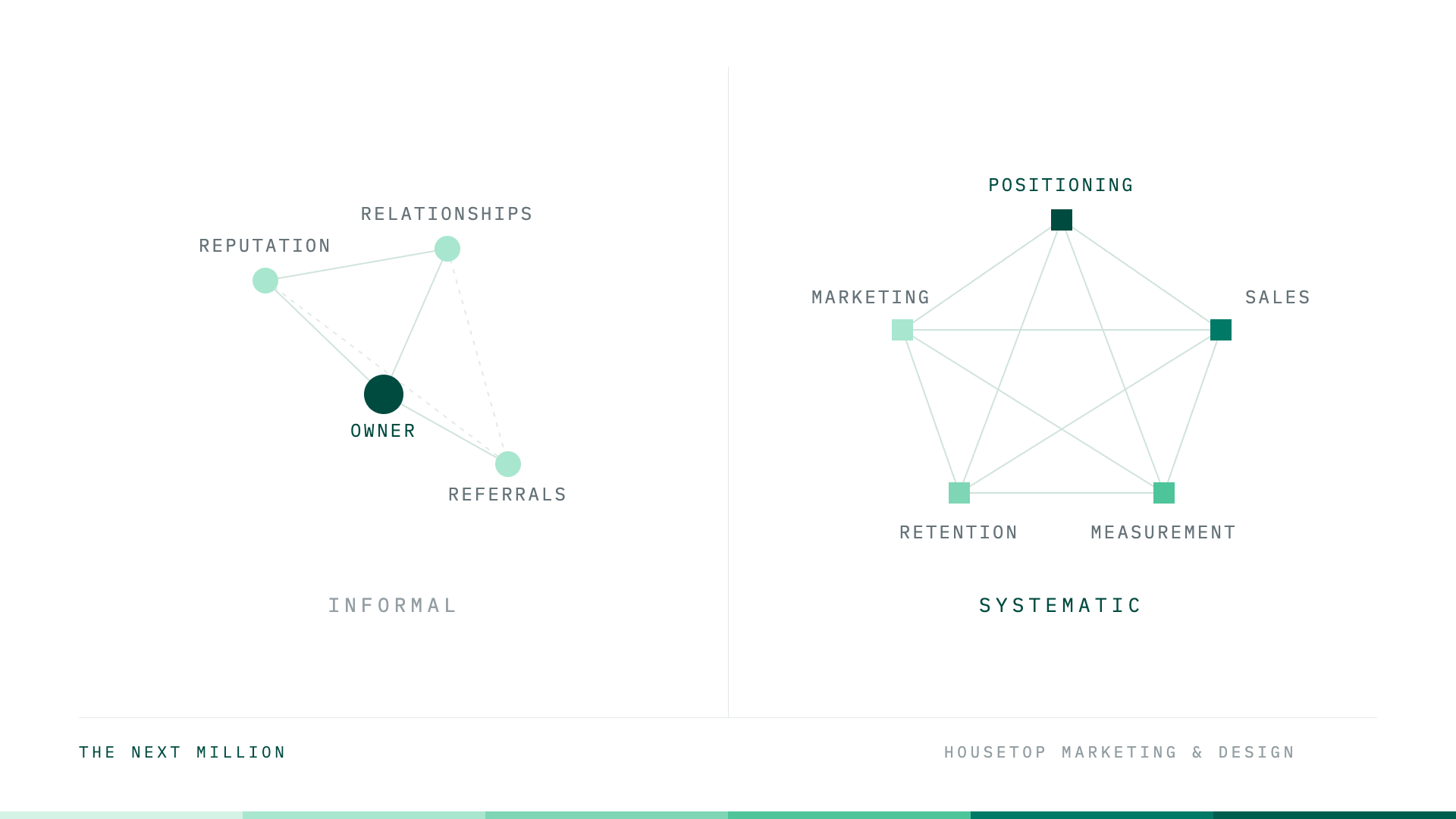
That’s usually because the business didn’t grow through a carefully designed growth strategy. It grew because the owner was good at what they did. Customers told other customers. Relationships developed. Opportunities came in. The company hired people and added services as it needed them.
It worked. In many cases, it worked really well.
The challenge comes when the business wants growth to become more intentional and predictable.
Getting to the next stage
At Housetop, we work primarily with established businesses that have already proven they can grow. The question usually isn’t whether they can build a successful company. They’ve already done that. The question is how they get to the next stage.
Sometimes that’s literal, like growing from $4 million to $5 million, or from $8 million to $10 million. Other times, the next stage means improving margins, building a more predictable pipeline or creating growth that doesn’t depend so heavily on the owner.
One of the first things we’ve learned doing this work is that the answer isn’t always more marketing.
More leads aren’t always the answer
I own a marketing company, so you’d probably expect me to say the opposite.
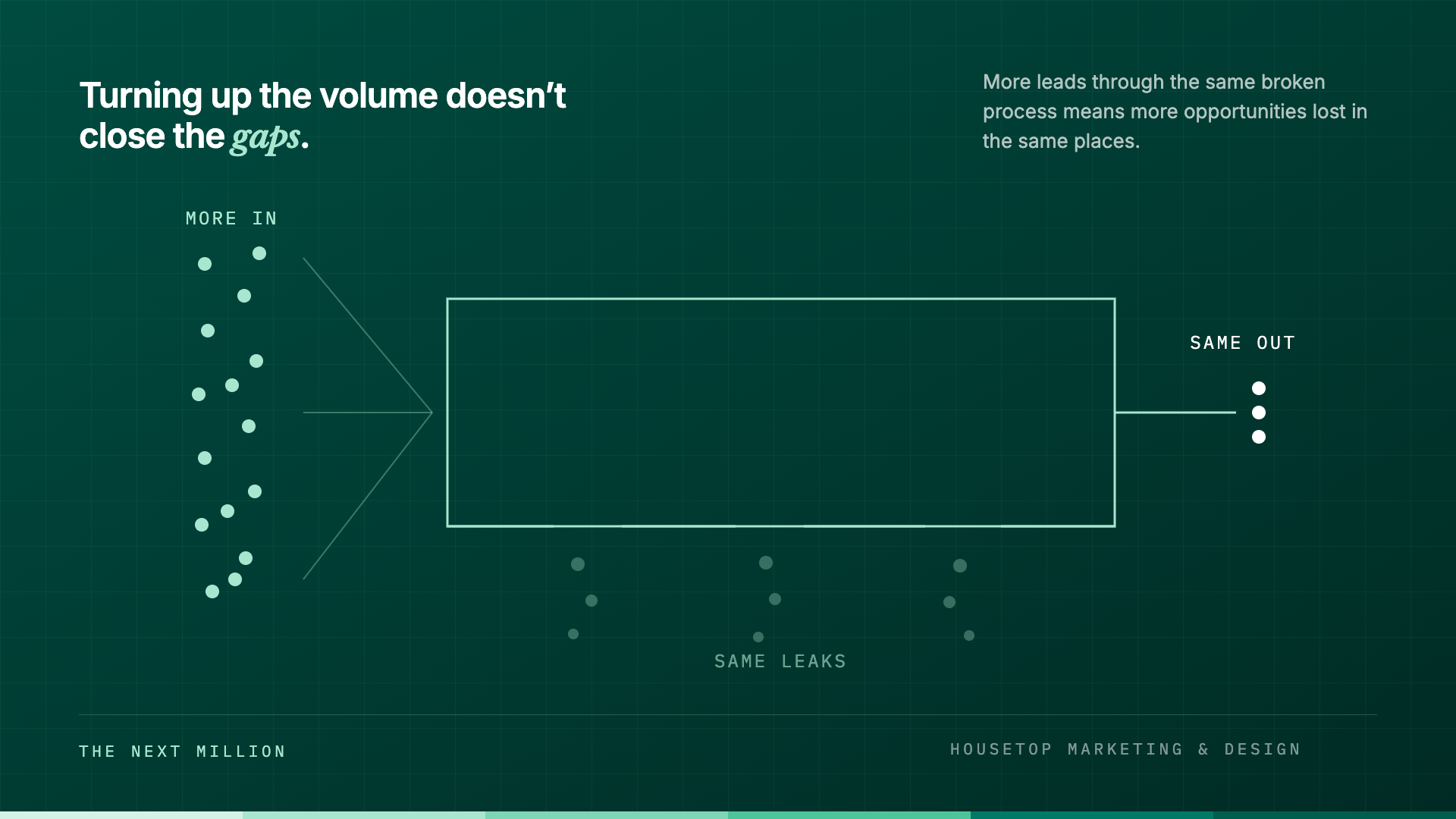
When growth slows, it’s easy to assume the business needs more leads. Marketing spend goes up. A new channel gets tested. Another salesperson gets hired. Maybe another agency gets brought in.
Sometimes that’s exactly what’s needed. But before putting more into the top of the funnel, there are more important questions to answer:
Where does your best new business actually come from?
What percentage of qualified opportunities become customers?
How long does that typically take?
What happens when someone doesn’t buy right away?
Why are you winning the deals you win, and losing the ones you lose?
How much of the process still depends on the owner?
Those questions tell you a lot about a company’s ability to grow.
“Walk us through what happens when a new lead comes in”
One of the questions we ask during our Blueprint sessions is simple: Walk us through exactly what happens when a new lead comes in.
It’s one of my favorite questions because the answer reveals a lot.
For some businesses, the process is clear. The lead is tracked. Someone owns the response. Qualification happens a certain way. Follow-up has a defined cadence. Proposals are tracked, and leadership can see what happens at each stage.
For others, the answer starts with, “Well, it depends...”
That answer is worth paying attention to.
The lead might go to the owner. Or a salesperson. Maybe it gets entered into the CRM. Maybe someone sends an estimate and makes a note to follow up. Everyone is working hard and doing what they believe they’re supposed to do, but there isn’t one defined process.
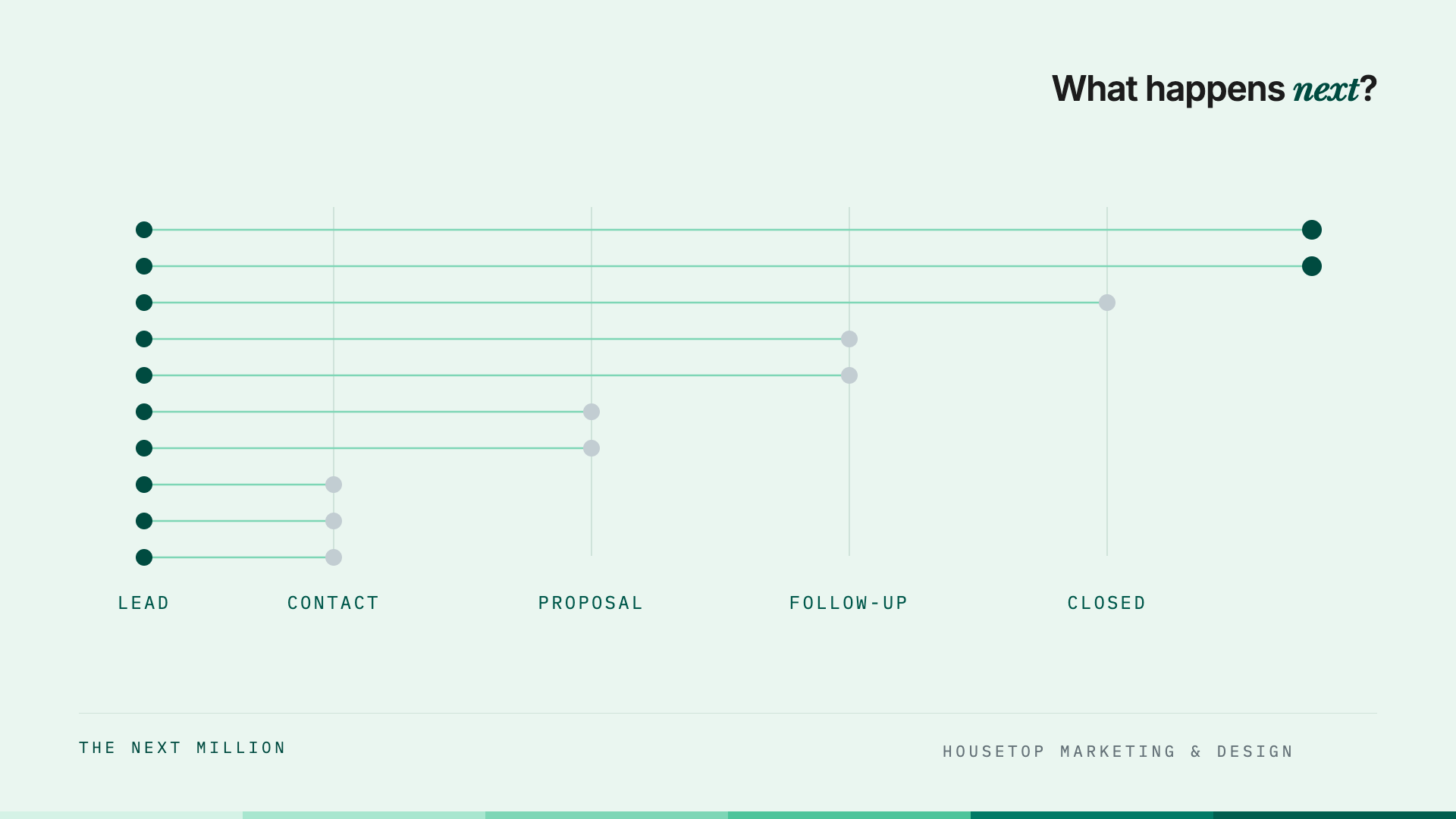
If you can’t clearly map the path from someone expressing interest to becoming a customer, it’s hard to know where revenue is being lost along the way.
What happened to the other 80?
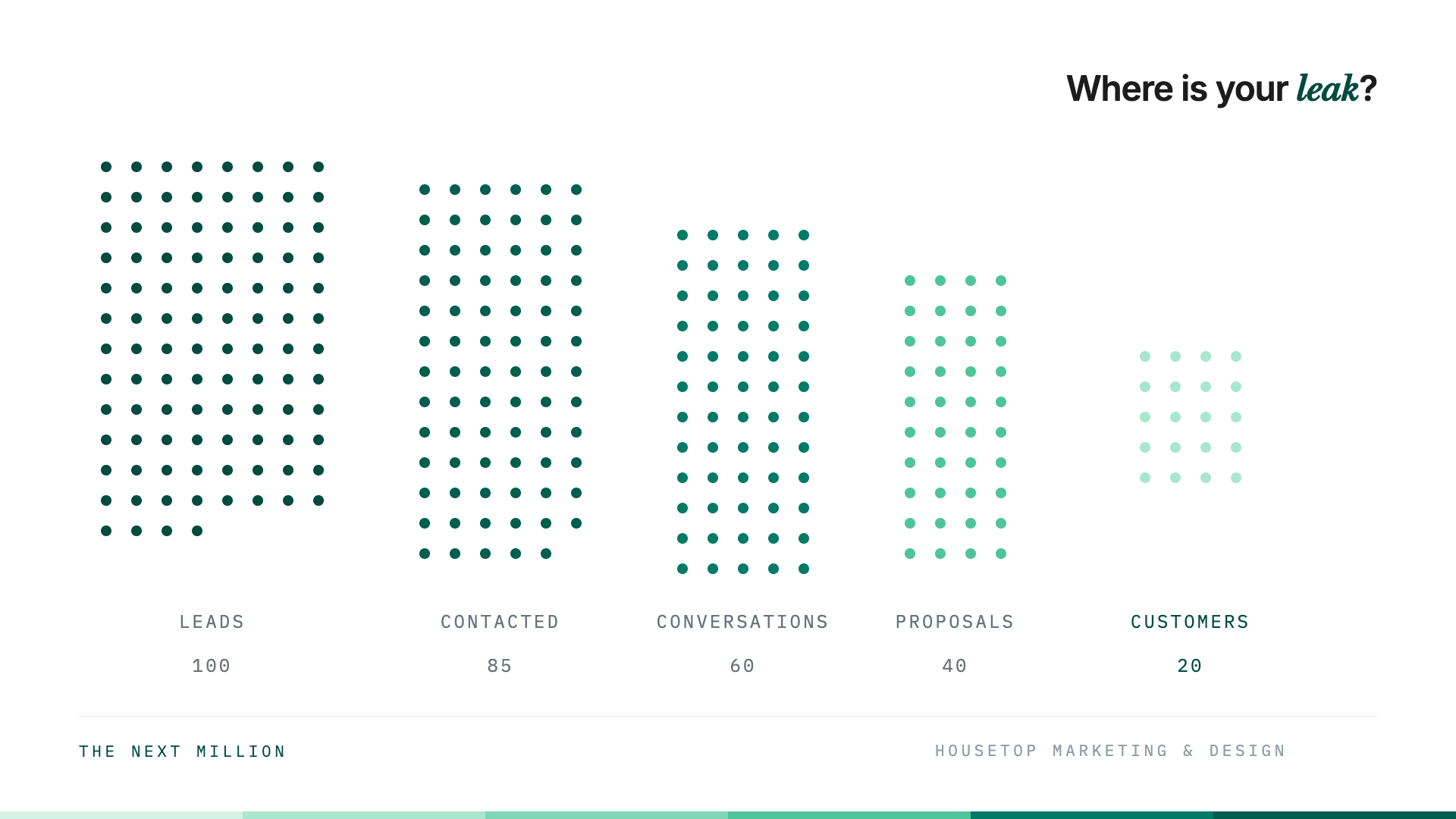
Picture a company that generates 100 qualified opportunities and closes 20 of them.
The immediate reaction might be: we need another 100 opportunities.
Maybe. But I’d also want to understand what happened to the other 80.
How many never got a timely response?
How many weren’t actually qualified?
How many received a proposal but no consistent follow-up?
How many chose a competitor?
How many simply weren’t ready yet, then disappeared because there was no process for staying in touch?
That’s why sales process is such an important growth lever for established businesses. Improve what happens to the opportunities you already generate, and the economics of everything upstream get better too.
Your marketing becomes more valuable because more of the demand it creates turns into revenue.
Four problems that look like one
The same thinking applies across the rest of the business.
If people are finding you but don’t understand why you’re different, that’s probably a positioning problem.
If good opportunities are coming in but aren’t followed up with consistently, that’s probably a sales process problem.
If customers love working with you but there’s no intentional effort around referrals, reviews or additional business, there’s probably opportunity sitting inside the customer experience.
If you’re spending money across several marketing channels but can’t connect any of them to actual revenue, you have a measurement problem.
From the outside, all of these look like the same thing: we need more business.
But solving the wrong problem can get expensive quickly.
A better question to ask
For an established business, there’s a more useful question than “How do we get more leads?” It’s this:
What would have to become true about our business for us to reliably generate, handle, convert and retain the amount of new business we want?
It’s a bigger question. It’s also the right one, because getting to the next million usually isn’t about finding one big idea.
It’s about figuring out what’s keeping the business from getting there now.