
I’ve had several conversations recently with owners of established businesses who have a clear picture of where they want their companies to go.
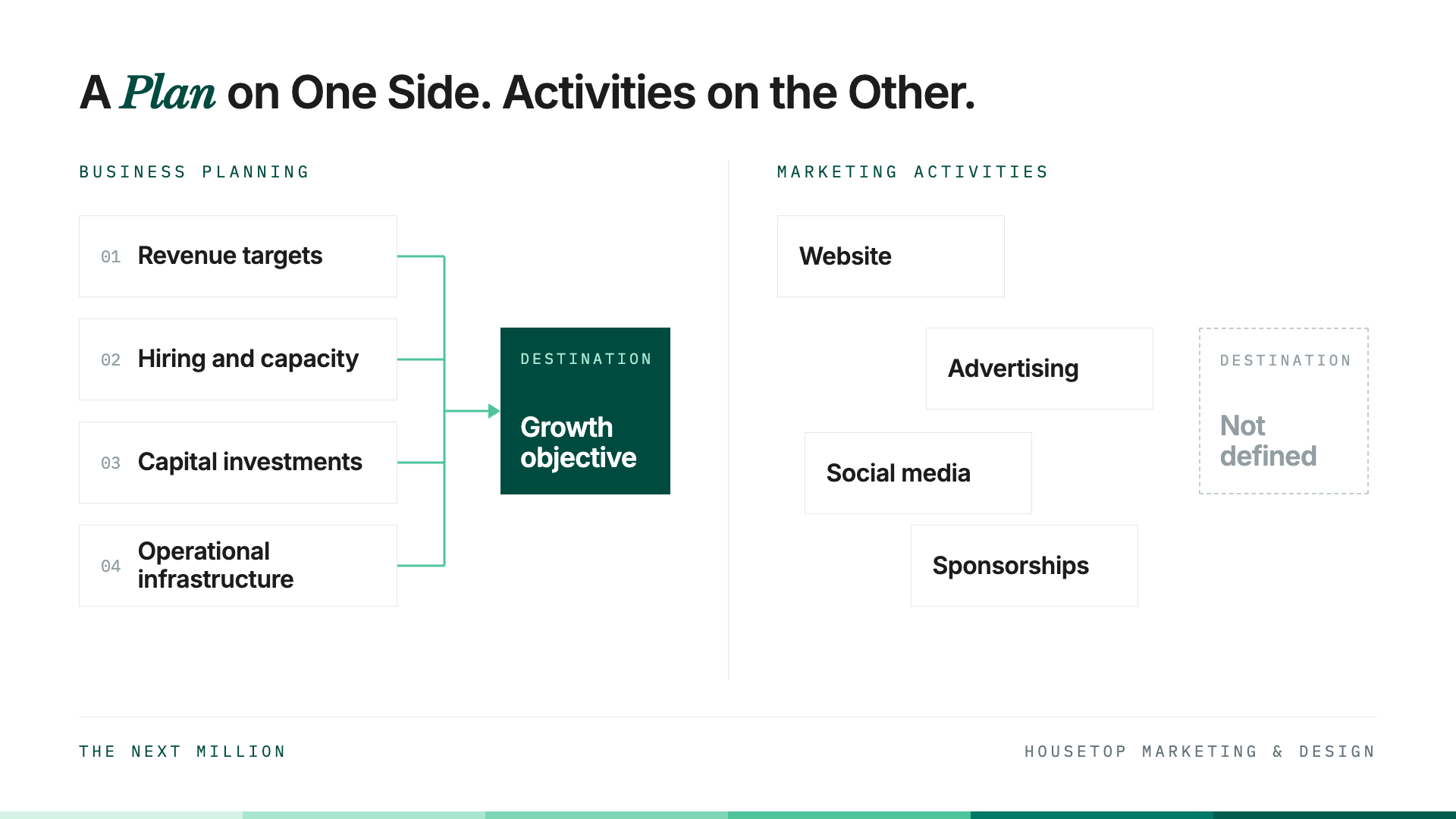
They know their revenue targets. They’re thinking about hiring. They have equipment or facility investments in mind, and they understand what needs to happen operationally to support the next stage of the business.
But when the conversation turns to marketing, the answers often get much less specific.
They might be investing in Google Ads, working with someone on social media, updating their website, sponsoring community events or relying on the reputation they’ve spent years building.
There’s nothing wrong with any of those activities. Many are worthwhile investments.
The real question is whether those activities are actually connected to where the business is trying to go.
We plan for almost everything else
Think about how much thought goes into the operational side of a growing company.
If you’re planning to add another $2 million in revenue, you probably have some idea of the people, equipment, facilities and capital that growth will require. You might be forecasting capacity, evaluating financing options or deciding which positions need to be filled.
Those decisions are made with the future in mind.
Marketing, on the other hand, is often managed around what’s happening right now.
Sales slow down, so we need to advertise. A competitor launches a better website, so it’s time to redesign ours. Someone suggests posting more on LinkedIn, so that becomes a priority for a few months.
Before long, a business can be spending thousands of dollars every month on marketing without a clear understanding of what those investments are supposed to accomplish.
The activities may all be reasonable on their own. That doesn’t mean they’re working together.
Marketing belongs in business planning
One of the first things I want to understand when meeting with an owner is what they want the business to look like over the next few years.
Not just how much more revenue they want, but where that growth should come from.
Are there particular services that produce better margins?
Customer segments that offer stronger long-term value?
Geographic markets where the company has room to expand?
Revenue streams that would make the business more predictable?
Those answers should shape the marketing decisions that follow.
Consider a company generating $8 million a year that wants to reach $10 million.
It’s tempting to treat the additional $2 million as a straightforward customer acquisition problem. Generate more leads, convert more customers and keep moving.
But what if the company already has more demand than it can serve in its least profitable category? What if its most valuable customers don’t respond to the advertising channels it’s currently using? What if the business is well known locally but almost invisible in the next market it wants to enter?
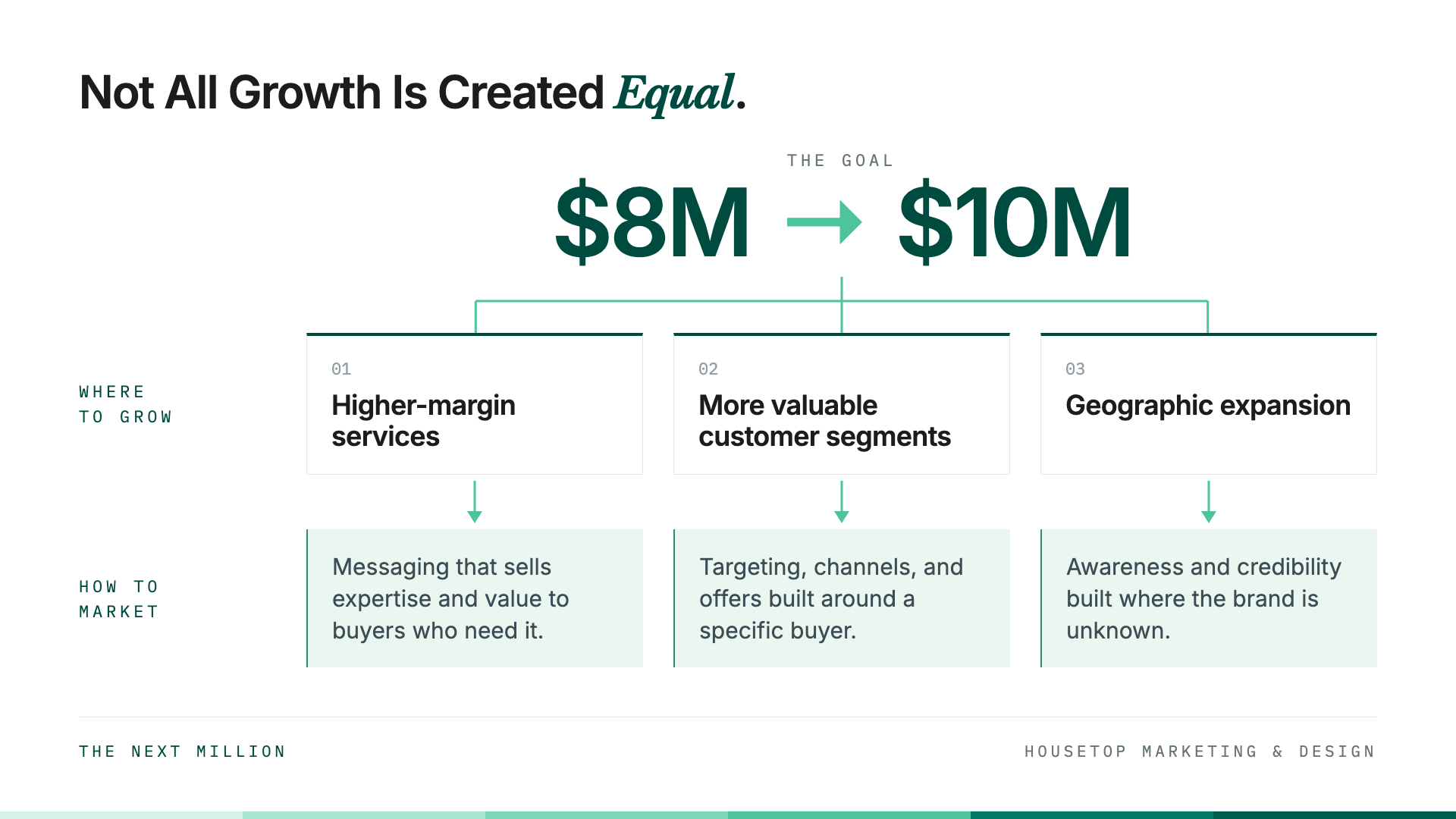
The right strategy could look completely different depending on the answers.
That’s why the business conversation needs to come before the marketing conversation.
Activity isn’t the same as progress
It’s possible to have a very busy marketing calendar and make surprisingly little progress toward your actual business objectives.
I’ve seen businesses with plenty of marketing activity but very little coordination between their positioning, website, advertising, sales process and customer experience. Different people or vendors own different pieces, but nobody is looking at the whole picture.
It’s also easy to get so used to the way you’ve always marketed the business that nobody stops to ask whether those activities still make sense.
The company has grown. Its customers may have changed. Its competitive landscape may be different. Its services, people and capabilities may have evolved considerably.
Yet its marketing still reflects the business it was five or ten years ago.
Sometimes the biggest opportunity isn’t adding another marketing channel. It’s reevaluating the assumptions behind the investments you’re already making.
Start with the destination
Every established business should be able to answer a few fairly straightforward questions:
Where specifically do we want our next stage of growth to come from?
Which customers, services and markets should we prioritize?
Why should those customers choose us instead of our competitors?
What does our marketing need to produce to support those objectives?
How will we know whether we’re making meaningful progress?
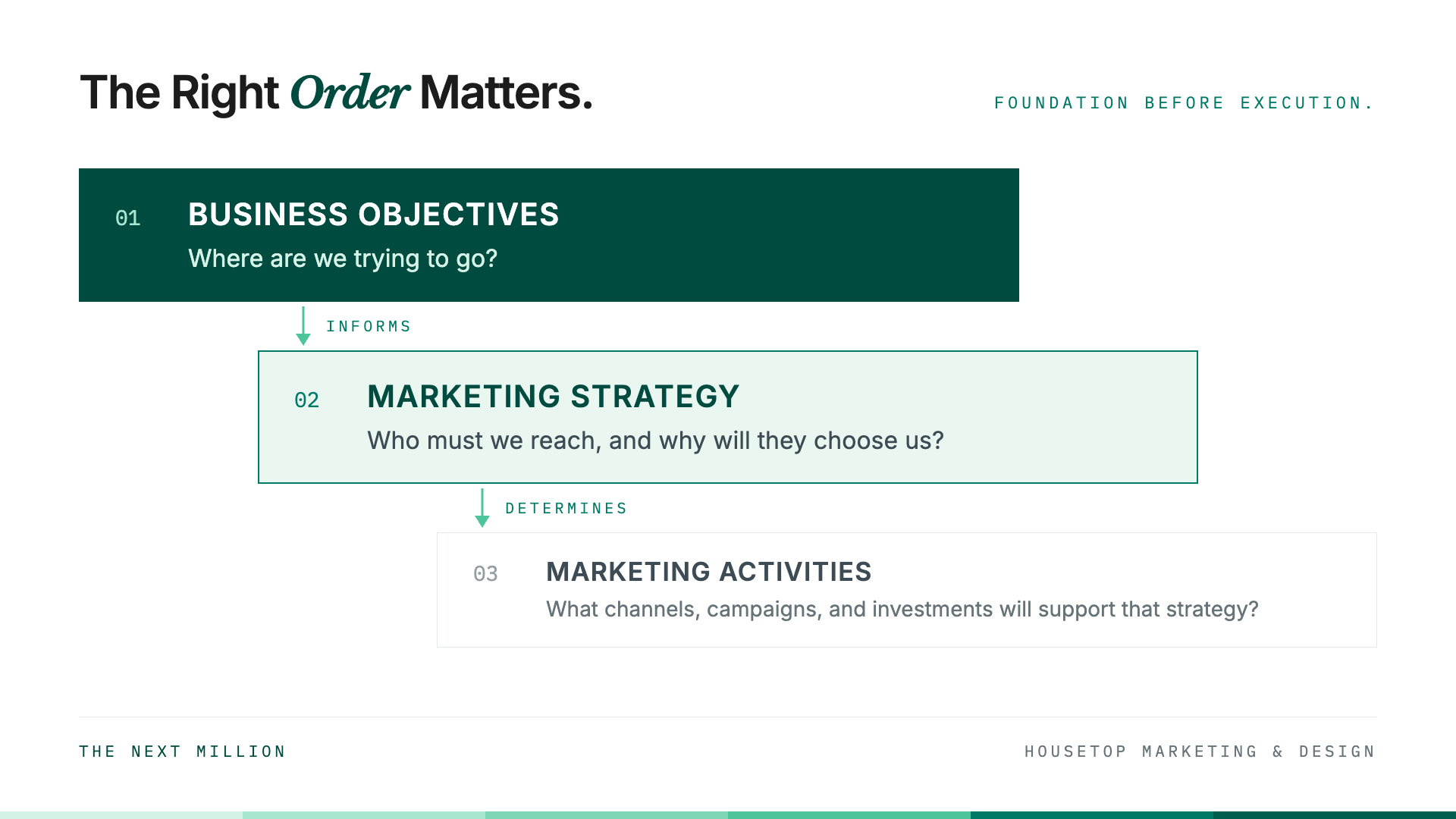
These questions aren’t complicated, but answering them well takes input from leadership, sales, operations and marketing.
Once the answers are clear, decisions about websites, campaigns, content, advertising budgets and technology get much easier. You have a basis for deciding what deserves investment, what can wait and what probably shouldn’t be happening at all.
More importantly, you can start measuring marketing against business outcomes instead of measuring how much marketing you’re doing.
A final thought
Most of the business owners I meet aren’t lacking ambition, work ethic or ideas. They’ve already built something successful. That’s why they’re having the conversation in the first place.
But as a business gets larger and more complex, its approach to growth needs to become more deliberate.
The next million dollars in revenue shouldn’t depend entirely on doing more of whatever happened to work last year. It deserves a plan.
And marketing deserves a seat at the table when that plan is being built.
– Brady Trapnell, Founder & CEO of Housetop